
The digital PR market is expanding rapidly, fueled by the growing demand for online visibility and SEO-driven strategies. Currently, the global digital PR agency market is valued at $7.67 billion, while digital PR services as a whole are projected to reach $8.14 billion.
This growth aligns with the wider PR industry, which was worth $128.92 billion in 2024 and is on track to hit $304.73 billion by 2033.
With a strong 10.03% CAGR forecast from 2025–2033, digital PR is increasingly shaping brand awareness, backlinks, and organic growth, powered by data-led campaigns and evolving media consumption patterns.
Top Picks: Digital PR Stats 2026
- The digital PR agency market is worth $7.67 billion, as per the last data recorded.
- Digital PR services are expanding faster than traditional PR, with a CAGR of 10.03%.
- Online searches for digital PR grew by 120% between 2024 and 2025.
- Data-led campaigns dominate digital PR, accounting for more than 42% of activity.
- Nearly 90% of professionals believe digital PR is the most effective way to earn backlinks.
- AI is transforming PR, with 8 out of 10 professionals expected to adopt AI tools.
Digital PR Market Size
- The digital PR agency market is currently valued at $7.67 billion.
- The broader Digital PR services market is estimated to reach $8.14 billion by the end of 2026.
- In comparison, the global public relations market size stood at $128.92 billion in 2024 and is expected to reach $304.73 billion by 2033.
Sources: Data Insight Market, Business Research Insights, Intel Market Research
Digital PR Market Growth
- The Digital PR market is projected to grow at a compound annual growth rate (CAGR) of 10.03% from 2025 to 2033.
- The broader Digital PR services market CAGR has been calculated at 5.7% from 2025 to 2033.
- The amount spent on digital advertising worldwide is forecasted to reach $1.16 trillion by 2025, which in turn is expected to benefit the growth of the digital PR market.
- Throughout 2025, global monthly searches averaged 5,300, with May 2025 reaching 8,100, the highest. April 2026 had 6,600 searches.
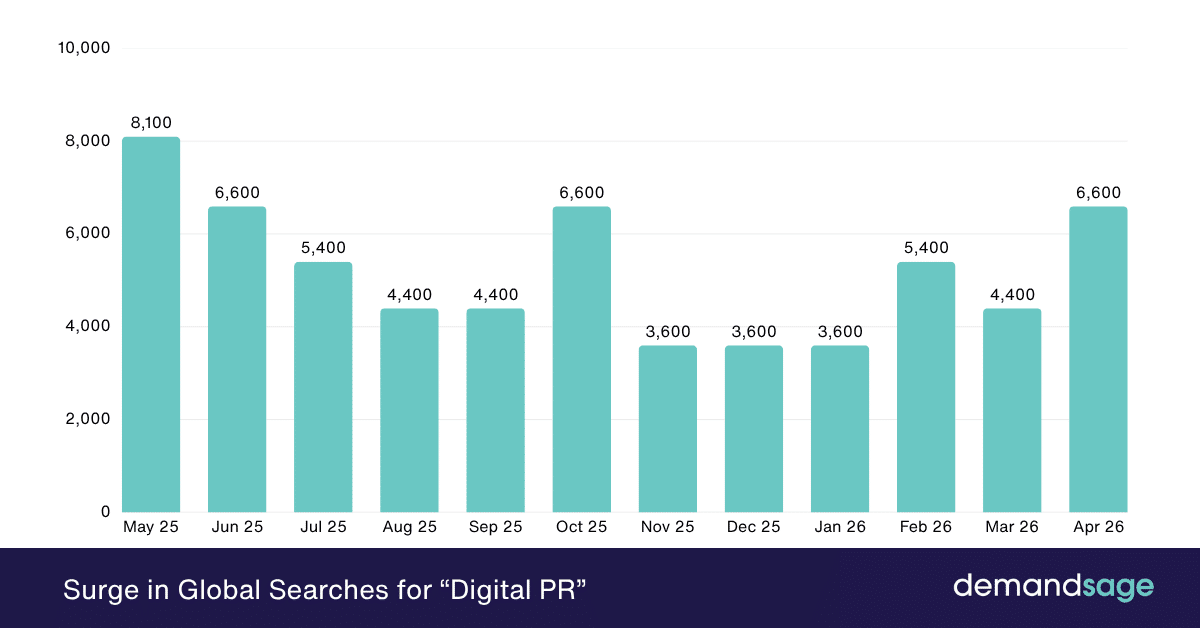
The momentum has accelerated sharply and is as follows:
| Monthly Breakdown | Google search for Digital PR |
|---|---|
| May 2025 | 8,100 |
| June 2025 | 6,600 |
| July 2025 | 5,400 |
| August 2025 | 4,400 |
| September 2025 | 4,400 |
| October 2025 | 6,600 |
| November 2025 | 3,600 |
| December 2025 | 3,600 |
| January 2026 | 3,600 |
| February 2026 | 5,400 |
| March 2026 | 4,400 |
| April 2026 | 6,600 |
- This represents a 120% increase in global search interest on Google in just 18 months (January 2024 – August 2025) and an almost 7-fold growth compared to the mid-2010s plateau of 1,700–1,900 searches.
Sources: Business Research Insights, Google Trends, Data Insights, Statista, Keywords Everywhere
How Many PR Campaign Types Exist?
- While the exact number varies by categorization method, our research indicates 7 distinct types of PR campaigns, including Digital PR.
- In the Digital PR subcategory, the types expand to 19+ campaign types.
- A 2023–24 analysis found data-led campaigns account for 42.3% of digital PR efforts, making it by far the most popular type.
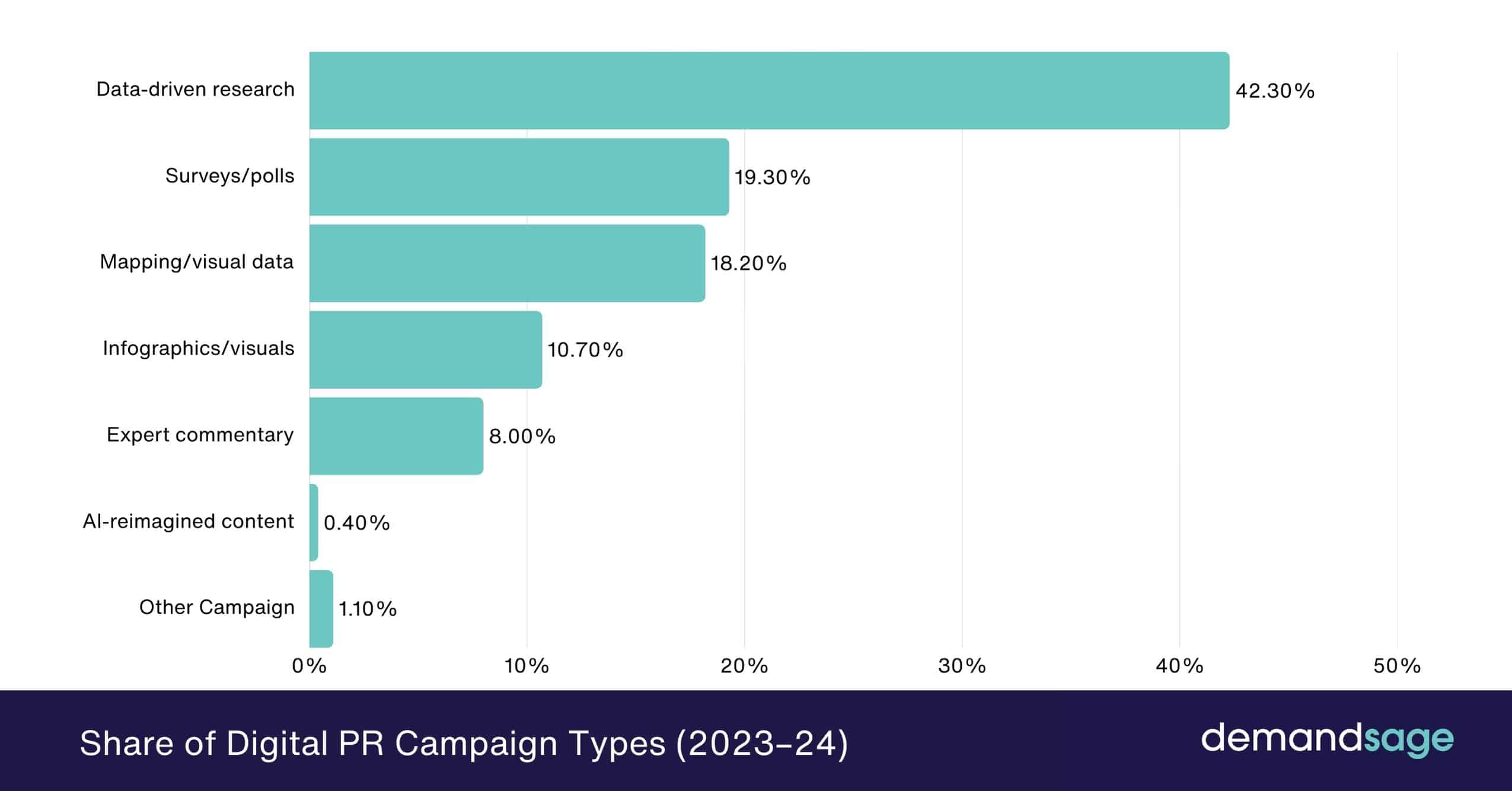
Let us check out other types of campaigns and their share in English-speaking countries:
| Digital PR Campaign Type | % of campaigns (2023–24) |
|---|---|
| Data-driven research | 42.3% |
| Surveys/polls | 19.3% |
| Mapping/visual data | 18.2% |
| Infographics/visuals | 10.7% |
| Expert commentary | 8.0% |
| AI-reimagined content | 0.4% |
| Other Campaign | 1.1% |
Note: PR teams may also run brand-launch campaigns, crisis PR, CSR publicity, and other campaigns, whose data is currently available.
PR Activity Report & Result Statistics
- A survey of professionals found that 89.6% believe digital PR is the most effective tactic for building backlinks.
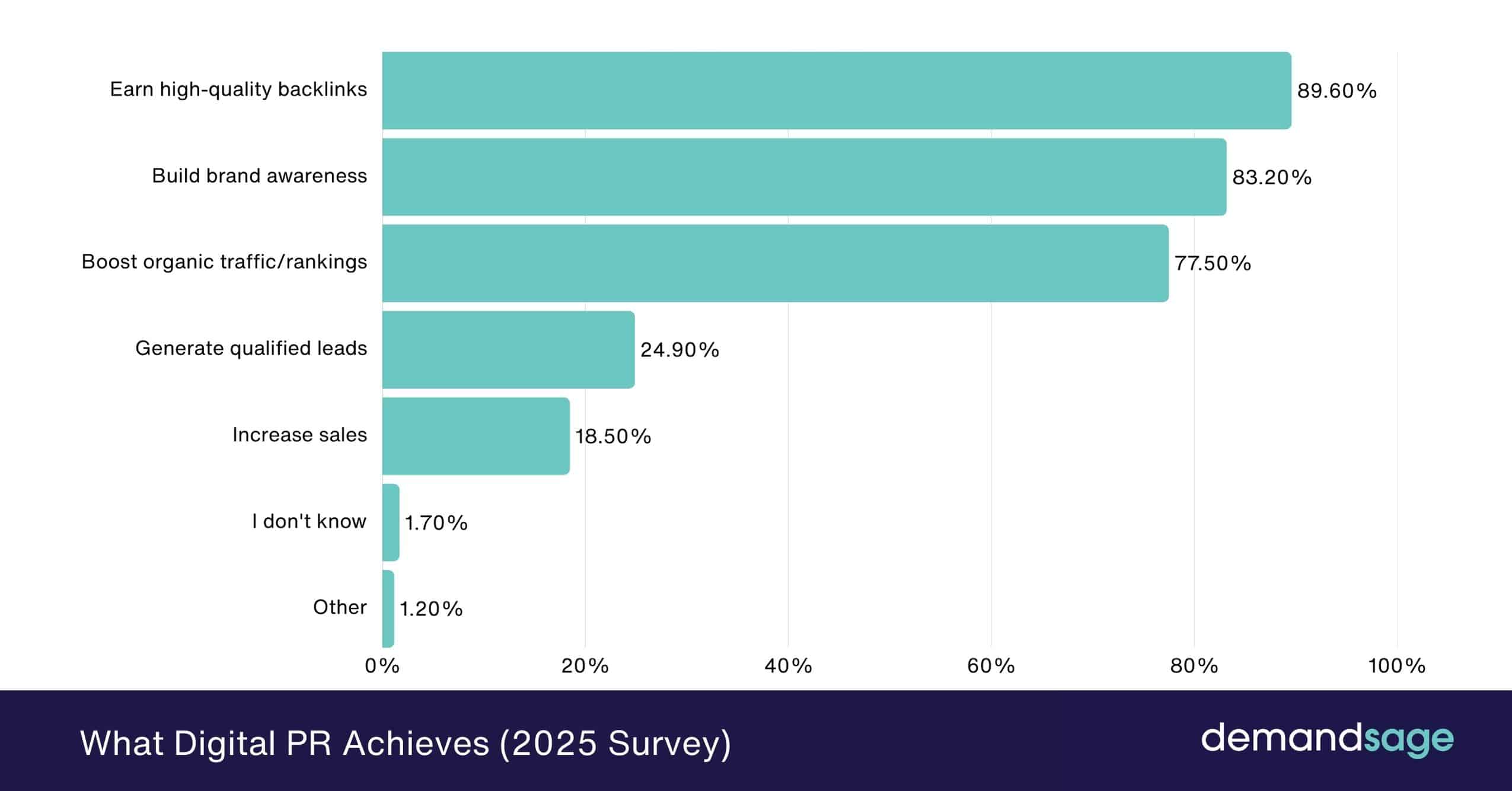
Here is the full breakdown of what professionals think of digital PR impacts and its effectiveness:
| PR Impact Metric | % of respondents |
|---|---|
| Earn high-quality backlinks | 89.6% |
| Build brand awareness | 83.2% |
| Boost organic traffic/rankings | 77.5% |
| Generate qualified leads | 24.9% |
| Increase sales | 18.5% |
| I don’t know | 1.7% |
| Other | 1.2% |
This data highlights that digital PR is valued mainly for SEO-related outcomes (links/traffic/visibility) rather than immediate sales. Because of this close relationship between earned backlinks and search visibility, many software brands partner with a specialized SaaS content marketing agency to ensure that incoming PR authority is routed directly into high-intent commercial content that converts.
Besides:
- Notably, nearly half, 48.6% of surveyed PR pros in 2024, said digital PR was more effective than a year earlier
- This is possibly reflecting changes like Google’s helpful-content emphasis.
Budget & Cost: PR Campaign Report
- When it comes to digital PR, 38% CEOs are directly responsible for controlling and allocating the PR budget, positioning them as key decision-makers in this area.
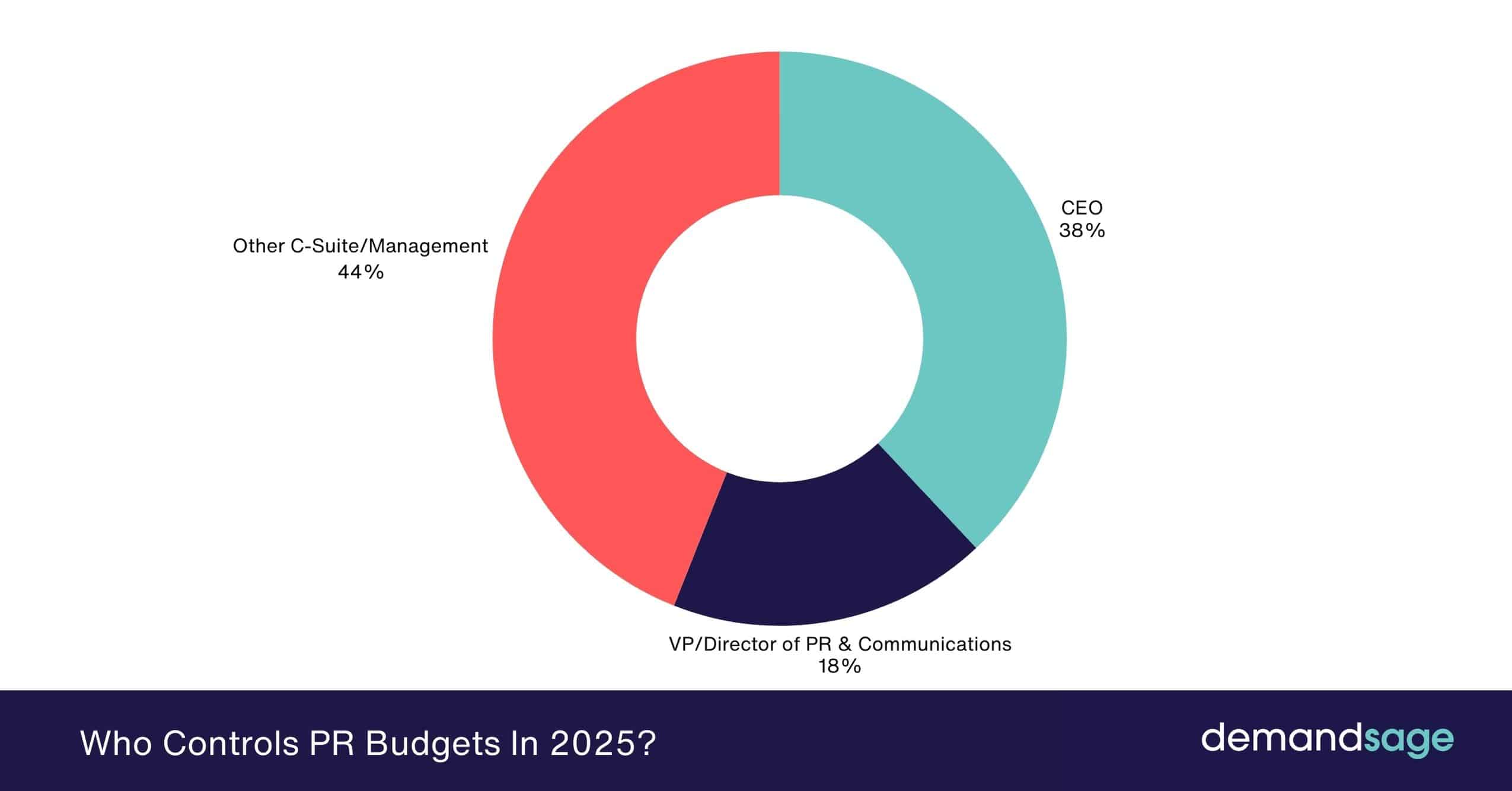
| Decision Maker Role In PR Budgets | Percentage |
|---|---|
| CEO | 38% |
| VP/Director of PR & Communications | 18% |
| Other C-Suite/Management | 44% |
(Redline)
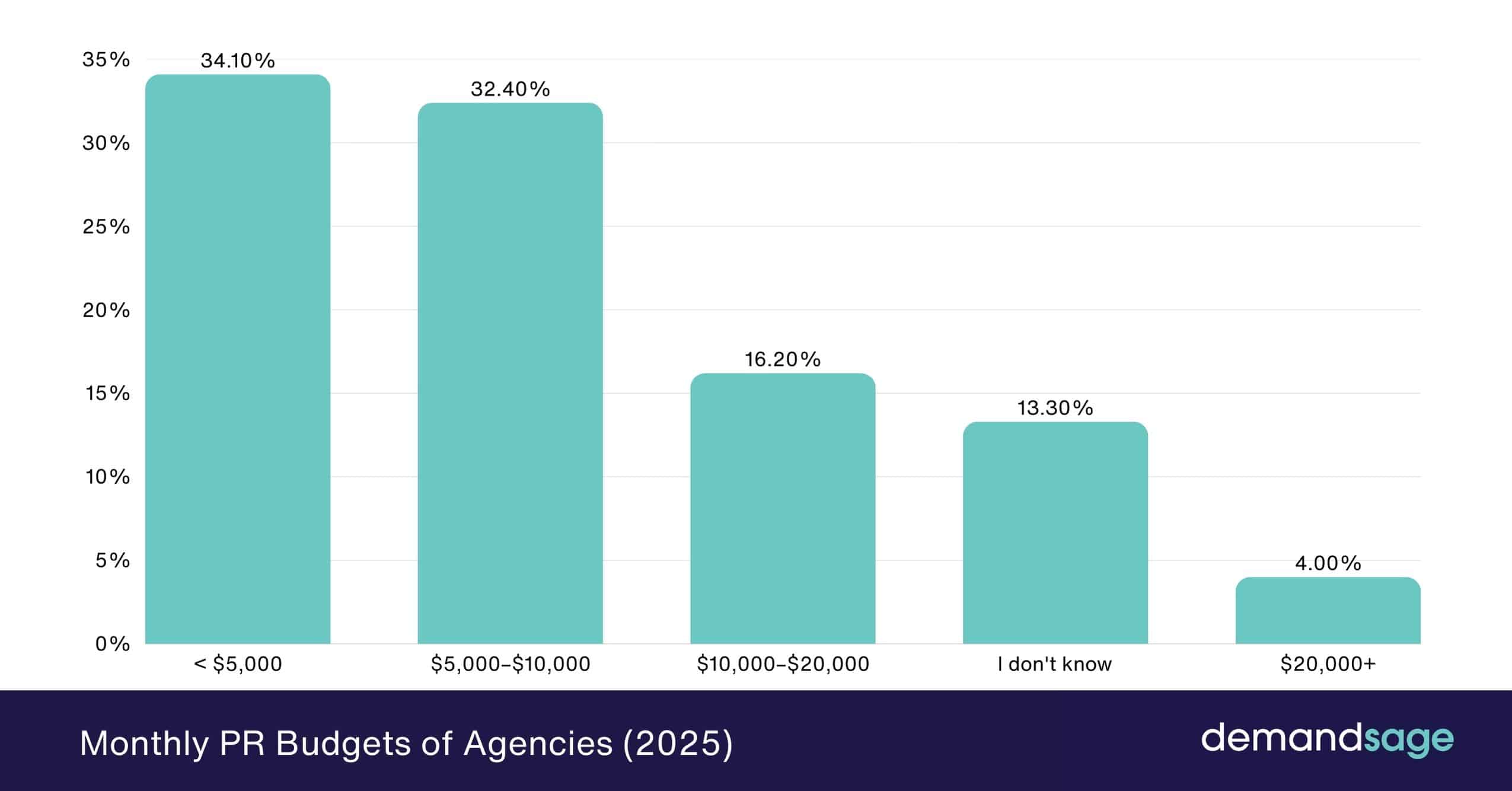
- A survey found 66.5% of digital PR teams work with budgets under $10,000 per month. Here is a complete breakdown:
| Digital PR Budget (or Client Contract Size) | Percentage of Respondents |
|---|---|
| < $5,000 | 34.1% |
| $5,000–$10,000 | 32.4% |
| $10,000–$20,000 | 16.2% |
| I don’t know | 13.3% |
| $20,000+ | 4% |
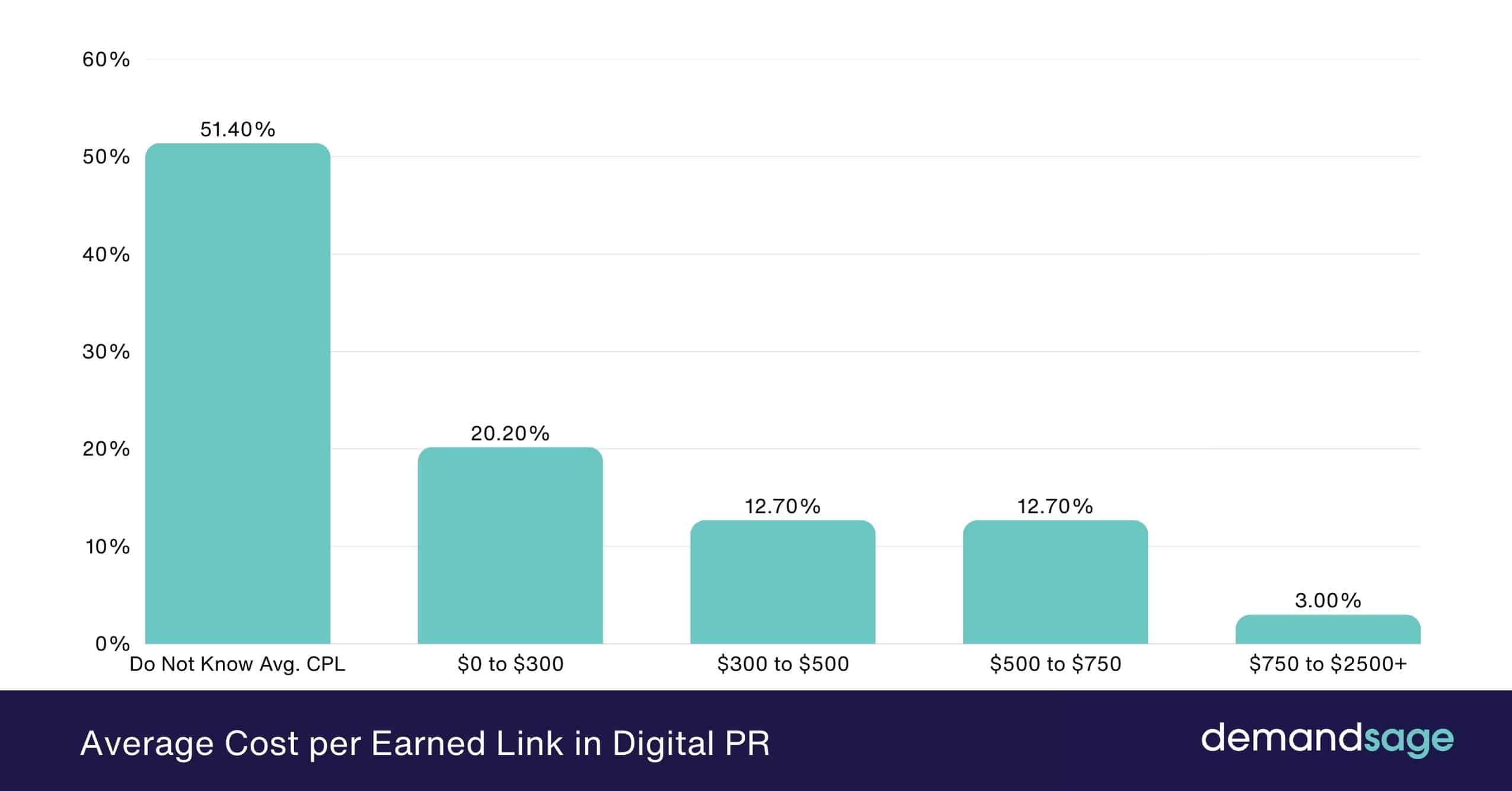
- More than 50% of digital PRs are unable to report their average cost per link.
- For those who can, the average cost of an earned link is approximately $750. Here is the breakdown:
| Budget Type | Digital PR share in % |
|---|---|
| Do Not Know Avg. CPL | 51.4% |
| $0 to $300 | 20.2% |
| $300 to $500 | 12.7% |
| $500 to $750 | 12.7% |
| $750 to $2500+ | 3% |
(Buzz Stream)
- For a Digital PR specialist, salaries on average are $78,520 per annum in the United States.
- Whereas a digital PR manager’s annual pay in the USA is $72,357.
(Zip Recruiter)
Digital PR & SEO Impact
- A survey of PR experts found that 89.6% utilize SEO strategies and 77.5% employ SEO to enhance organic rankings.
- 67.3% of marketers use Digital PR for link-building, making it the most popular method among others.
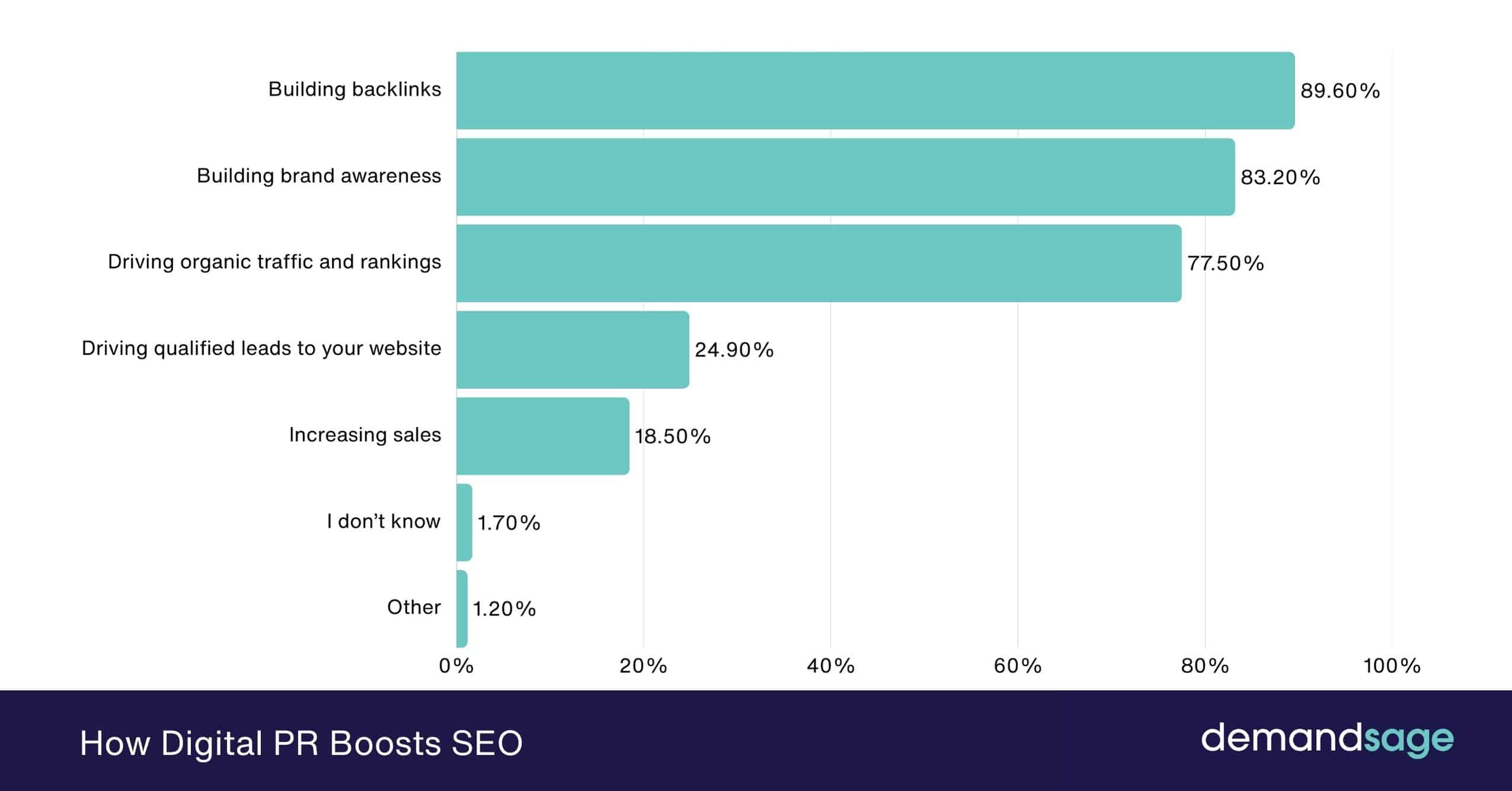
Take a look at this survey result to understand the impact of SEO in digital PR and how it is being used:
| Purpose | Percentage (%) |
|---|---|
| Building backlinks | 89.6% |
| Building brand awareness | 83.2% |
| Driving organic traffic and rankings | 77.5% |
| Driving qualified leads to your website | 24.9% |
| Increasing sales | 18.5% |
| I don’t know | 1.7% |
| Other | 1.2% |
(Buzz Stream)
Digital PR Trends & Influencers
- Influencers and digital tactics dominate modern PR, with 93% of marketers now using influencer marketing as part of their strategy.
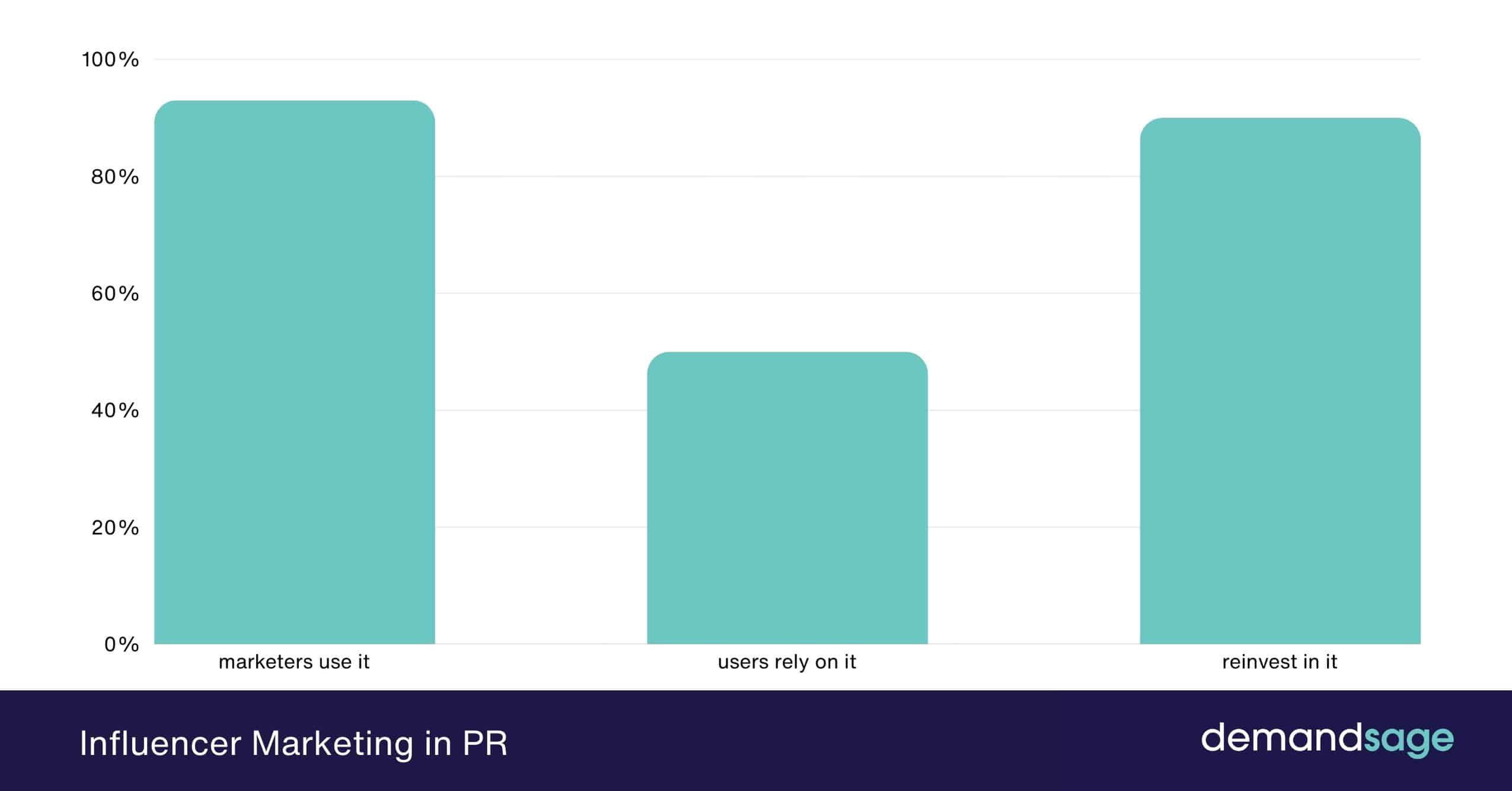
- Correspondingly, almost 50% of social media users rely on influencers for brand recommendations.
- Many businesses, as many as nearly 90%, reinvest in influencer content due to its high engagement as well.
- Over 91% of businesses use social platforms for marketing.
- Media Relations is the most popular skill that companies demand (47%) for a successful digital PR campaign, with 46% of them demanding the Strategic Planning skill.
Challenges In Digital PR
- Journalists are bombarded with over 100 pitches every week by PR pros, so it’s no surprise that more than half of PR professionals (53%) say getting a response is their biggest challenge. In fact, only about 3.3% of pitches ever get a reply.
- About 48% of PR teams say they lack the time, budget, or staff to do their work effectively, which limits how long their campaigns can run.
- Trust is another big challenge.
For example, journalists don’t fully trust traditional press releases, with only about 20% of them viewing them as “trustworthy” sources.
This means that PR content has to work extra hard to be seen as credible.
These challenges have led to two key trends in the PR industry:
- Nearly 60% of PR professionals say that managing relationships with the media gets more difficult every year.
- They are now putting more stress on personalizing their pitches and targeting the right journalists, even though only 20% believe this personalization is highly effective for securing coverage.
(Blue Tree, Redline)
Digital PR Tools Stats
- About 83% of PR professionals use a journalist/media database to identify targets.
- Over 50% Digital PRs use media monitoring software daily.
- Roughly 51% employ specialized PR reporting/analytics tools to measure campaign progress.
- Editorial/Content/Marketing Calendars & Media Monitoring Tools are the most widely used, with 62% of teams using or planning to use them.

Here are a few more tools used by digital PR:
| Tool | Percentage of Teams |
|---|---|
| Editorial/Content/Marketing Calendar | 62% |
| Media monitoring tools | 62% |
| Reporting & data visualization tools | 48% |
| Content editing tools | 46% |
| SEO tools | 43% |
| Email marketing software | 33% |
- Spreadsheets are the most common platform that is used to store media lists, with over 68% of marketers using it. 64% of them opt to go with a dedicated digital PR software (like Muckrack).
(Super Links, Blue Tree, Determ, Reboot Online)
AI Adoption In PR
- 8 out of 10 public relations (PR) professionals will use AI tools for tasks like content creation and writing assistance.
- AI adoption in PR is expected to have the greatest impact on research and list building, with 68% of respondents identifying it as a key area.
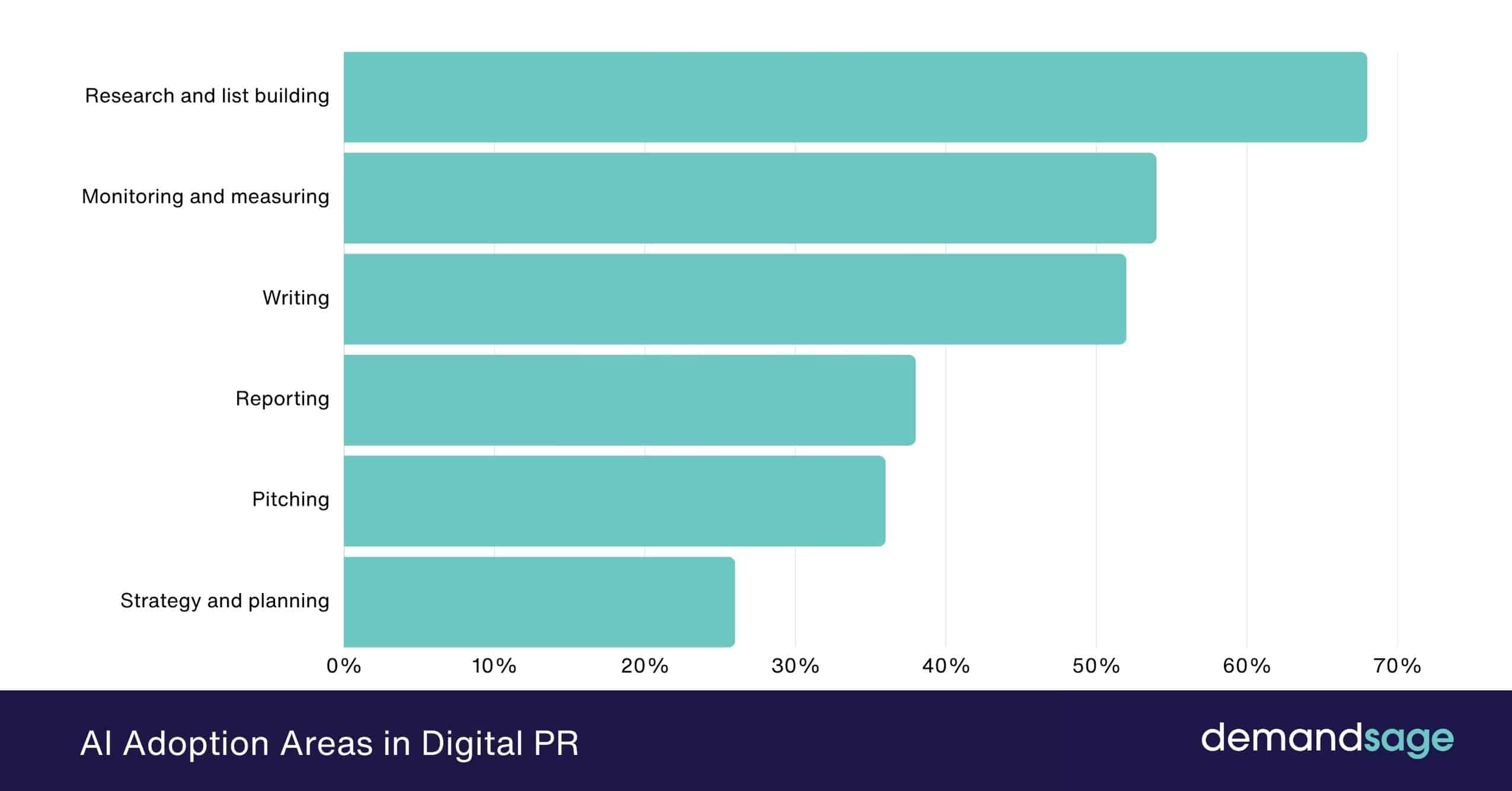
Let us look at how AI is being used in an impactful way in Digital PR:
| Area of Impact | Percentage of Respondents |
|---|---|
| Research and list building | 68% |
| Monitoring and measuring | 54% |
| Writing | 52% |
| Reporting | 38% |
| Pitching | 36% |
| Strategy and planning | 26% |
(Super Links)
Digital PR Vs Traditional PR
- ICCO, in their global survey, points out that agency leaders said the top areas for investment were Social media community management (19%), Digital PR (20%), and Media relations (16%), showing digital and traditional allocations are now roughly on par in near-term spend priorities.
(ICCOPR)
- Digital PR is typically less expensive to execute.
- For example, BuzzStream reports that digital PR retainers average $5,000–$10,000 per month, whereas traditional PR agencies charge an average of $10,000–$14,500 per month.
| PR Approach | Typical Monthly Cost |
|---|---|
| Digital PR | $5,000 – $10,000 |
| Traditional PR | $10,000 – $14,500 |
(BuzzStream 2)
- A vast majority of 91% of journalists prefer email, with only a small fraction (around 4%) welcoming social media pitches. (Redline)
This statistic is vital because it shows that, while PR is increasingly digital, the core method of communication with the media remains rooted in a professional, one-on-one email exchange.
In summary, digital PR offers faster, data-driven results at a lower cost, while traditional PR still relies on legacy media. Many organizations use both in tandem for maximum impact.
